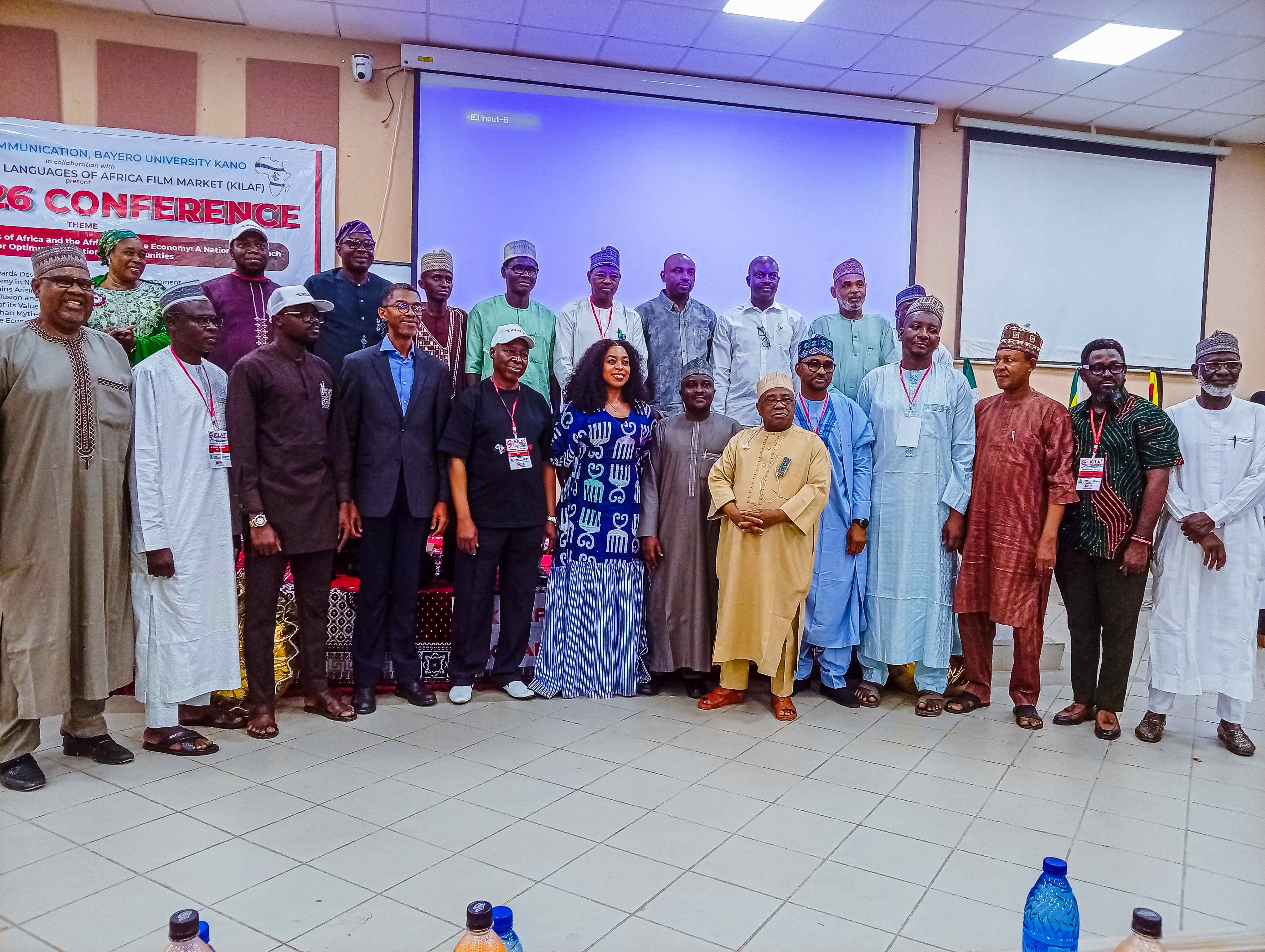
The Vice-Chancellor of Bayero University, Kano (BUK), Professor Haruna Musa, fsi, has called for responsible filmmaking that promotes Africa's cultural heritage and indigenous languages as a catalyst for unlocking the continent's orange economy and creating sustainable opportunities for young people.
Represented by the Deputy Vice-Chancellor, Academics, Professor Ahmad Muhammad Tsauni, the Vice-Chancellor made the call while declaring open the 2026 Kano Indigenous Languages of Africa Film Market (KILAF) Conference, at Bayero University, Kano, on 10 November 2026.
The conference, themed "Indigenous Language Films of Africa and the African Orange Economy: A National Approach for Optimum Utilisation of Opportunities," brought together academics, filmmakers, media practitioners and industry stakeholders to discuss the future of indigenous language films in Africa.
The Vice-Chancellor noted that indigenous language films are not merely a form of entertainment but powerful instruments for preserving Africa's cultural identity, promoting local languages, creating employment and stimulating economic growth. He urged filmmakers to produce responsible and culturally relevant content capable of projecting Africa's rich heritage to global audiences while contributing meaningfully to national development.
He reaffirmed Bayero University's commitment to supporting initiatives that bridge academia and the creative industry, describing the conference as a strategic platform for knowledge exchange, innovation and collaboration.
Earlier, the Dean, Faculty of Communication, Professor Mainasara Yakubu Kurfi, expressed appreciation to the Vice-Chancellor for his exceptional support towards the successful hosting of the conference. He disclosed that Professor Haruna Musa provided ₦1.5 million for the students' film competition, approved the use of the conference venue at no cost, donated three buses for transportation and ensured adequate security throughout the event.
Professor Kurfi said the University's support reflected its commitment to nurturing student creativity and strengthening engagement with the creative sector.
Speaking on the conference theme, the Dean explained that the African orange economy offers immense opportunities through indigenous language films by preserving culture, documenting history, strengthening identity and creating jobs for writers, actors, directors, editors, translators, marketers and distributors.
He observed that Africa's linguistic diversity remains one of its greatest assets, noting that stories told in indigenous languages resonate more deeply with communities, preserve collective memory and communicate authentic African perspectives to audiences both within and outside the continent.
According to him, achieving the full potential of indigenous language filmmaking requires sustained investment in training, production facilities, funding, professional networks and reliable distribution channels. He also stressed the importance of collaboration among universities, creative organisations, industry practitioners, public institutions and local communities.
Professor Kurfi further noted that universities have a vital role in connecting communication scholarship with the film industry through teaching, research and intellectual engagement. He expressed confidence that the partnership between the Faculty of Communication and KILAF would strengthen ties between academia and industry while promoting innovation and professional development.
He encouraged participants to engage in practical discussions on expanding the reach of indigenous language films, leveraging technology for production and distribution, and developing creative enterprises capable of providing sustainable livelihoods for African youths.
As part of the conference proceedings, the Head of the Department of Information and Media Studies, Professor Nura Ibrahim, alongside Dr Haruna Ismail, presented a paper titled "Kannywood and the Communicative City of Kano."
The presentation portrayed Kano as a communicative city, highlighting how its cultural heritage, media landscape and indigenous film industry have shaped communication, identity and socio-economic development in Northern Nigeria.
The conference continues with paper presentations, panel discussions and networking sessions aimed at advancing indigenous language filmmaking and positioning Africa's creative industries for greater economic impact.
Dr. Ikechukwu Ajiaya was the Chairman of the occasion.