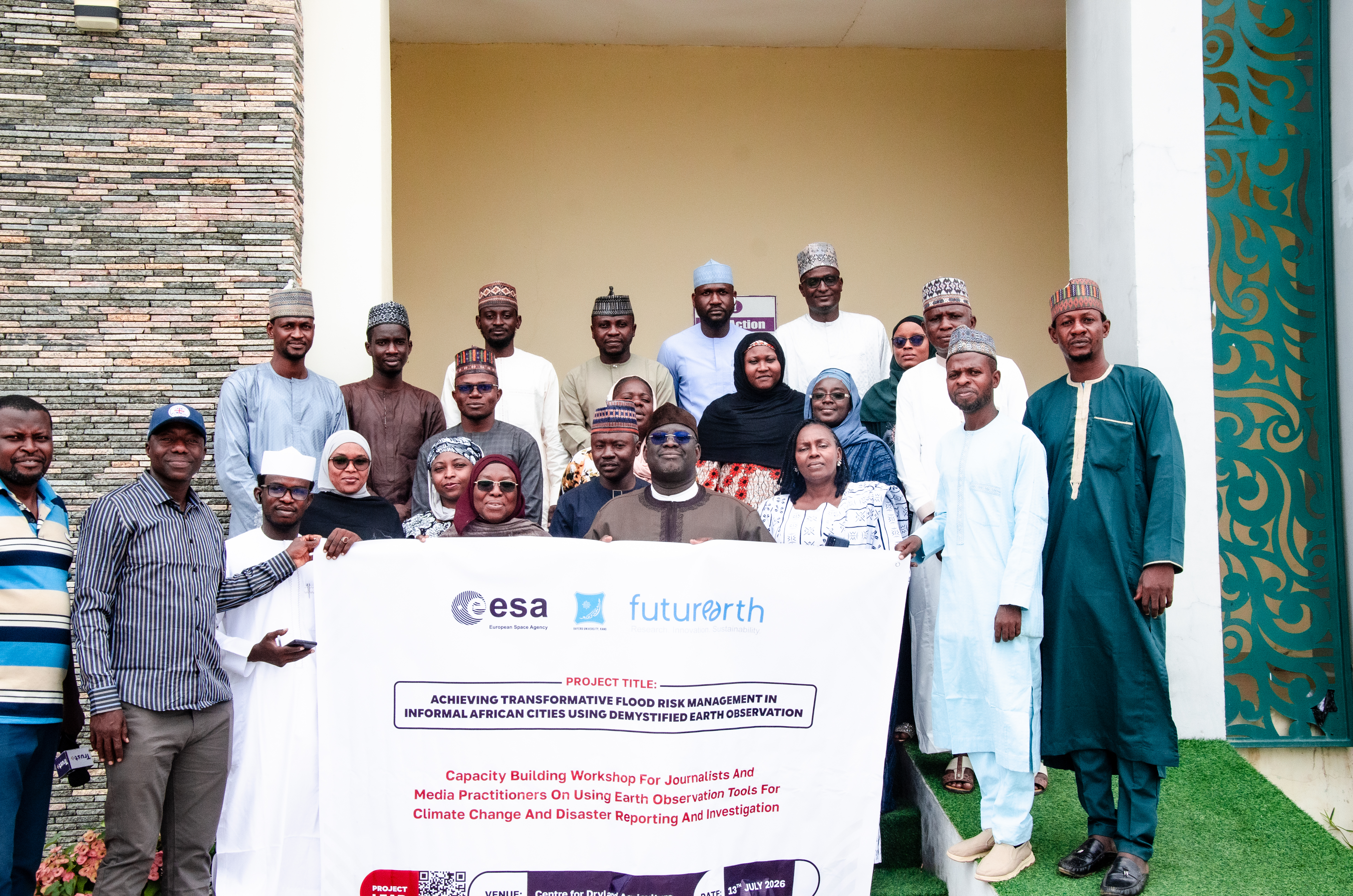
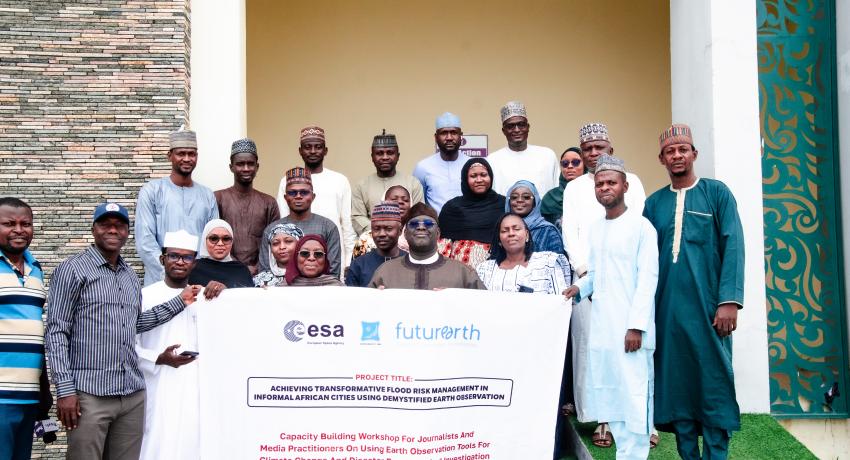
Bayero University, Kano (BUK), has taken another significant step towards promoting evidence-based environmental journalism by equipping journalists and media practitioners with Earth Observation (EO) technologies to strengthen reporting on climate change, disaster risk reduction and environmental sustainability.
The capacity-building workshop, held at the University on Monday, July 13, 2026, brought together journalists, researchers and development partners to enhance participants' skills in the use of satellite imagery, geospatial data and other Earth Observation tools for accurate, data-driven reporting.
Speaking at the opening ceremony, the Project Team Lead, Professor Aliyu Salisu Barau, said the increasing impacts of climate change—including flooding, drought, desertification, deforestation, pollution and biodiversity loss—have made science-based journalism more important than ever.
He noted that the media occupies a strategic position in informing the public, shaping policy discussions and promoting accountability, stressing that journalists must increasingly rely on credible scientific evidence to produce compelling and impactful environmental stories.
"Earth Observation technologies provide reliable, objective and continuously updated information about our changing environment. They enable journalists to verify facts, undertake investigative reporting, produce data-driven stories and communicate complex environmental issues through powerful visual evidence," Professor Barau said.
According to him, the workshop was designed to expose participants to practical Earth Observation platforms and geospatial tools for monitoring land-use changes, flooding, drought, water resources and other forms of environmental degradation.
He added that wider adoption of these technologies would enhance public awareness, strengthen disaster preparedness, promote environmental accountability and contribute to climate resilience and sustainable development.
In her remarks, the Deputy Vice-Chancellor (Research and Development), Professor Amina Mustapha, described climate change as one of the most pressing development and security challenges facing Northern Nigeria and the wider Sahel region.
She observed that the shrinking Lake Chad, advancing desertification, degrading rangelands and increasingly unpredictable weather patterns continue to threaten livelihoods, food security and economic stability across the region.
Professor Mustapha challenged journalists to devote greater attention to climate-related issues affecting Nigeria rather than focusing predominantly on environmental disasters in other parts of the world.
"The media serves as the bridge between scientific knowledge and public understanding. You have the responsibility to translate scientific evidence into stories that influence policy, shape public behaviour and hold governments and institutions accountable," she said.
She further encouraged participants to embrace investigative and solutions-focused journalism by documenting the experiences of vulnerable communities and scrutinising the management of environmental and ecological resources.
"Climate change is not merely an environmental issue; it is a development issue, a justice issue and a human security issue. The stories you tell can inspire action, strengthen resilience and drive sustainable development," she added.
Professor Mustapha reaffirmed Bayero University's commitment to supporting journalists through collaboration with its researchers, laboratories and research centres to ensure scientific findings are effectively translated into public knowledge and policy action.
Delivering a virtual presentation, the Research Coordinator and European Space Agency (ESA) Liaison for Future Earth, Freya Muir, highlighted the role of Earth Observation technologies in improving climate modelling, environmental monitoring and evidence-based decision-making.
The workshop, themed "Earth Observation Journalism, Disaster Risk Reduction and Climate Change Communication," featured practical sessions on the use of satellite imagery, remote sensing and geospatial data to enhance climate and environmental reporting.
Participants described the training as timely and highly relevant, pledging to apply the knowledge acquired to produce accurate, evidence-based reports while combating misinformation and fake news on climate change and other environmental issues.