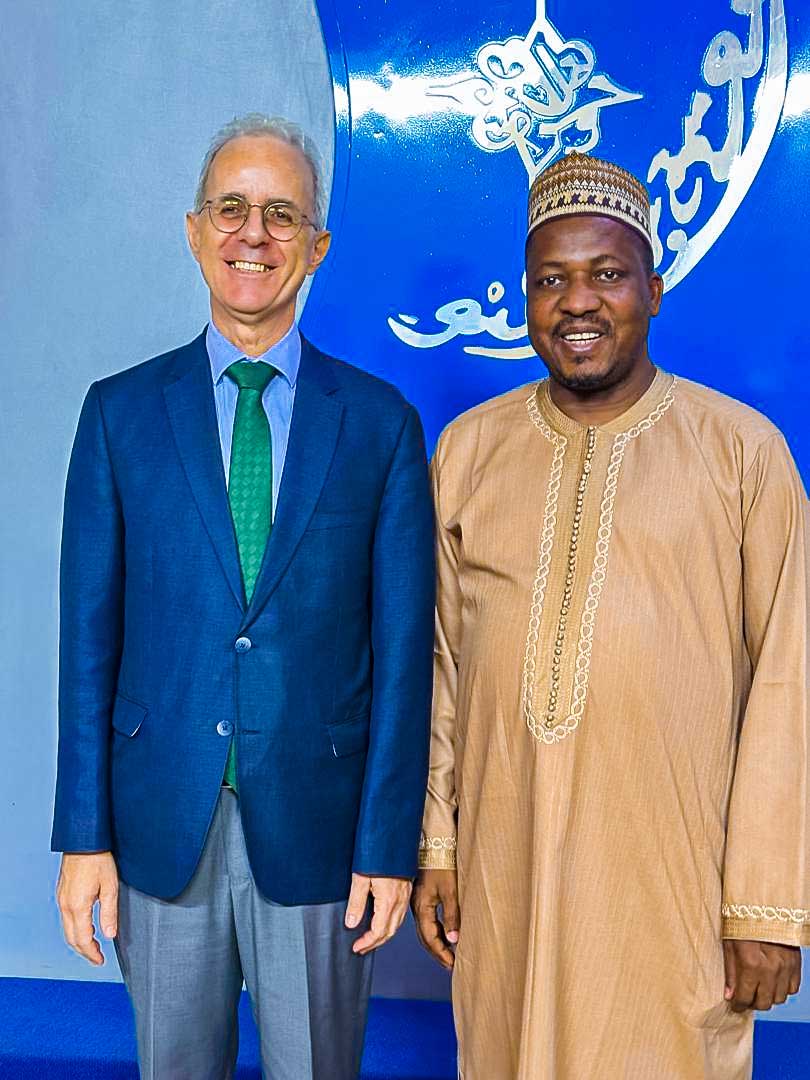

In a move that signals a growing push for international academic collaboration, the Turkish Ambassador to Nigeria, His Excellency Mehmet Poroy, on Thursday paid an official visit to Bayero University Kano, positioning the institution at the centre of renewed efforts to strengthen educational and research ties between Nigeria and Turkey.
The visit, which marked the Ambassador’s first to any Nigerian university since assuming office, was aimed at exploring pathways for partnership between Bayero University and leading Turkish institutions, particularly in the areas of research collaboration, staff and student exchange. It comes at a time when both countries are seeking to deepen bilateral cooperation beyond traditional diplomatic and economic engagements.
Speaking during the visit, Ambassador Poroy noted that Bayero University’s growing reputation as one of Nigeria’s leading academic institutions informed his decision to begin his university engagements in Kano. He emphasized that fostering institutional linkages between Turkish universities and Bayero University would not only enhance academic exchange but also strengthen broader diplomatic relations between the two nations.
The Ambassador highlighted the increasing number of Nigerian students studying in Turkey, revealing that more than four thousand Nigerians are currently enrolled in Turkish universities. He added that the Turkish government continues to expand educational opportunities for Nigerians through its annual scholarship programme, which provides fully funded placements for students across various disciplines. According to him, such initiatives are part of Turkey’s long-term strategy to build enduring people-to-people connections through education.
Receiving the delegation, the Vice-Chancellor of Bayero University, Professor Haruna Musa, welcomed the initiative and described the visit as timely and strategic. He congratulated the Ambassador on his appointment and reaffirmed the University’s readiness to establish formal partnerships with Turkish institutions. He stressed that collaboration in higher education remains a critical tool for strengthening international relations, particularly in areas of research, innovation, and human capital development.
Professor Musa used the opportunity to present an overview of Bayero University’s growth and institutional capacity, noting that the University is approaching a significant milestone as it prepares to celebrate its golden jubilee. He said he would extend an invitation to the Turkish Embassy to participate in the forthcoming anniversary, describing it as an opportunity to further cement ties between the University and international partners.
He outlined the scale and diversity of the University’s academic environment, with 38,000 students and 4700 of staff spread across multiple faculties and research centres. The Vice-Chancellor drew attention to the University’s globally recognized research hubs, including the Centre for Dryland Agriculture (CDA) and the Africa Centre of Excellence for Population Health and Policy (ACEPHAP) both supported by the World Bank and widely acknowledged for their impact across Africa. He also referenced the Dangote Business School, established through the support of African industrialist Aliko Dangote, as part of the University’s expanding academic footprint.
Beyond infrastructure and enrolment, the Vice-Chancellor emphasized Bayero University’s strong academic offerings, which span a wide range of undergraduate and postgraduate programmes, as well as its growing global recognition. He cited recent 2026 international rankings by the Times Higher Education (THE) that place the University among the top institutions in Nigeria in terms of teaching quality and research output, while also highlighting its leadership as the best in Nigeria in terms of international outlook—an indicator that reflects its openness to global collaboration.
Professor Musa further revealed that the he and Deputy Vice-Chancellor, Research and Development, Professor Amina Mustapha participated in a Africa Universities Summit in Nairobi, where Bayero University was recognised among Africa’s leading universities. He encouraged the Turkish Ambassador to consider participating in future editions of the summit, describing it as a key platform for building international academic networks.
On research priorities, the Vice-Chancellor pointed to Bayero University’s strengths in areas such as renewable energy, infectious diseases, and dryland agriculture—fields that align closely with global development challenges and offer strong potential for joint research with Turkish partners. He noted that the Centre for Dryland Agriculture, in particular, attracts students from 15 countries, reflecting the University’s growing international appeal.
The visit concluded with a shared commitment to formalizing partnerships through memoranda of understanding with Turkish universities. Both parties expressed optimism that sustained collaboration in education and research would not only benefit their institutions but also contribute to deeper diplomatic and cultural ties between Nigeria and Turkey.